Total Pageviews

Wednesday, June 8, 2011

Masai Mara Reserve

Last week I was on a tour of Kenya in Masai mara national reserve ,a wonderful place for wild life safari in the world. I had prepared for this tour in April and got preliminary work like yellow fever vaccination ,visa etc. But due to some problem in the home front I had to cancel it later. But as things turned out I again changed mind and just 5 days prior to departure decided to go with the tour. I visited only Masai Mara reserve in kenya,though there are many other game reserves in kenya worth visiting like Lake Nakuru ,Ambresoli reserve etc. Masai Mara is situated about 220 kms south west of Kenyan capital Nairobi . Located just one degree south of equator at an altitude of just over 5000ft Masai mara offers a pleasant climate ,with cool breeze, warm sun and occasional showers all in a day!
Masai Mara derives its name from Masai tribe who are original tribal inhabitants of the region and the Mara river which flows through it dividing the reserve between Kenya and Tanzania. Though historically and geographically it is the same reserve now the southern part is in Tanzania (Serengeti National park ) and the kenyan part is Masai Mara. This is the savanna you will see in all National geography channel or animal planet ,Discovery etc.and is popular for the thick wild population it has . The great migration of animals from Tanzania to Kenya from july /August  is migration into Masai Mara from serengeti .
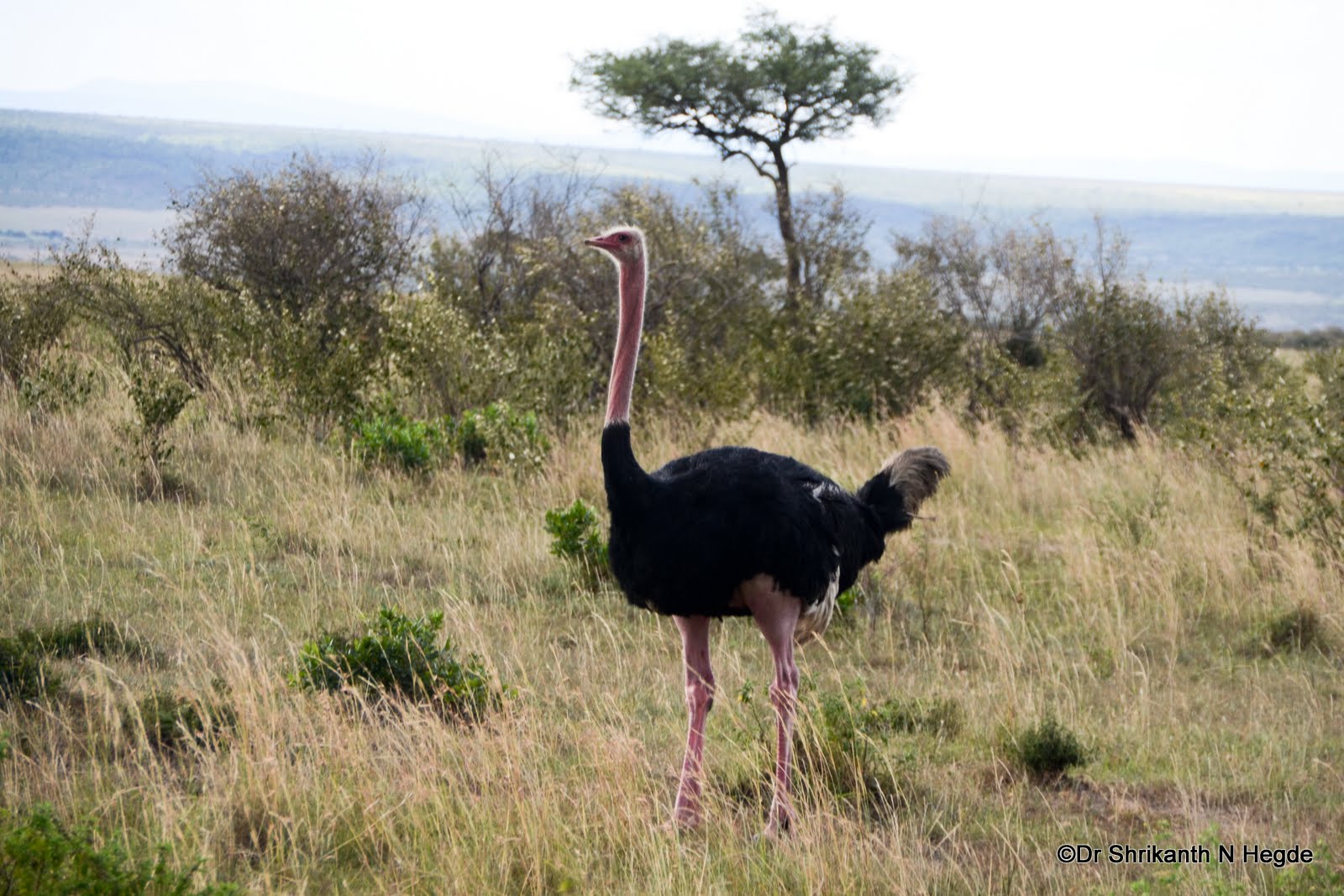
Masai Mara is home to thousands and thousands of animals and during the period of great migration the numbers just change to millions . It is house for "Africa's Big Five"namely elephants, wild buffalos, Rhinos,Leopard and Lions along with count less wild beasts, Antelopes, Bucks, Gazelles, Impalas, Giraffes,Zebras, baboons, hyena,jackals etc. The birds in masai mara are more than 450 species with large variety of predators like eagles, harrier, Vutures etc. Ostrich, Lilac Breasted Rollers, etc are seen in plenty .
The biggest surprise in masai mara is the unique relation animals and man have ! Nowhere else in the world probably we get to see the wild life in such numbers and the close distance at which they can be observed and yet they remain  harmless to human visitors is a wonder which cannot be put in words but has to be seen to believe! The very thought of a cheetah walking gracefully just a couple of feet from us and yet aloof of our presence , the mighty Lion sitting just a foot from safari jeep is something probably unique to african safari!
ALion family with their catch!


It's a day out for a herd of african elephants!


Whoever comes in safari van is not his concern when he is taking rest ! A cheetah resting unmindful of his visitors in safari jeeps!

Giraffes in Masai mara
 Gazelles and Antelopes fill the landscape !


A male ostrich


For a full album of masai Mara please click here
Also you can click on the picture below to view the webalbum
Masai mara pics

Thursday, May 19, 2011

Lightning


Lightning is an interesting event which happens during rains of pre monsoon showers or by the end of monsoon. It is difficult to capture the event on camera as it is very short and fast event ( Lightning event! to be precise). Though I have tried to capture them many times it doesnt happen because it should be dark , there should be no rains. we need a safe shelter from where we can take picture with visibility of good area of open sky free from any distarcting elements and above all camera and lens need protection from water ,dust and wind.With some camera settings it is not difficult though! Here are some points:
1. Camera to be set in manual mode and aperure of 6-9 and shutter speed kept at bulb so that we can really wait for lightning and release shutter after the event.
2. ISO can be kept at 200 -400 or otherwise picture becomes bright with long exposure.
3. It is better to shoot in RAW and further adjustment can be done post exposure
4.Tripod is a must and if we have a wireless remote release it is much better .
5. Keep the lens in manual focus and set focus for infinity.
6. last but not the least wait patiently and keep on taking pics .
Ihave taken these pictures from t the terrace of my house  or if there is rain try from the balcony sit out place. So far I didnt get an oppurtunity to go outdoors in field or open space but  it can make wonderful pictures outdoors. The settings I use or as explained above and used white balance of fluorescent as it will make sky dark blue.The focal length was kept minimum so that larger area of sky can be covered and can catch any event in the exposed area.I usually  focus the camera in the direction of maximal lightning. It usually happens in some definite and particular area repeatedly.I just release the shutter using remote release and wait for lightning.If there is one I release the shutter release after the event and if there is none after 20-30 seconds. I set the long exposure noise reduction on from the camera menu. This will take sometime to process after shooting is over and in between if there is one lightning we are sure to miss it. But I feel it necessary as it will decrease grains.
To shoot one event if are lucky 8-10 exposures may be needed or it can be easily hundred takes for one successful capture. It definitely depends on the frequency of lightning. Big streaks or long vertical streaks really require lot of luck and tons of patience . When I get one surely will post here.

 The light streak seen near the roof is LCD screen light from my son's camera ,as it was a long exposure shot it has captured light trail when he moved camera in that direction.

Monday, May 16, 2011

Ranganathittu

Painted Stork at Ranganathittu:

This weekend I was in Mysore to attend annual state conference of Association of Physicians of India ,karnataka chapter. This was an oppurtunity for visiting Ranganathittu bird sanctuary. Sometimes we tend to have difficulty in visiting places which are nearby and this was true in my case. For more than a year several of my plans to visit this sanctuary didnt materialise for various reasons ,though I had no difficulty in travelling to far off places like Kutch . As the birding season was almost over I had dropped the idea for this year. But the conference gave me another chance this month.Though it was late it is better than never. Ranganathittu is unique in several respects. Though it is season dependent for migratory birds it is said throughout the year it provides some birding options.Second ,in this place birds are so accustomed to human visitors they hardly take note of our presence and dont move away even if the boat goes near. Though most of birds like painted storks, open billed storks were juvenile and pelicans,pied kingfishers, heron, darters,carmorant,egret, etc are in plenty, probably I missed spoon bills and few others for off season

Painted storks adults and a baby:

Young Painted Storks :They are yet to get painted by nature!

Open billed stork


Stone Plover


Night Heron

Pied King fishers in pairs:


Spot billed Pelican

For a web album of Ranganathittu click here or click on photo below:
Ranganathittu

Tuesday, May 3, 2011

House Sparrow

House Sparrow:
This once common household bird has almost disappeared from most parts of our country. I remember my childhood days at my village when we had a permanent guest at home in form of sparrow. They used to have their nest behind a wall photo or mirror and later we provided a box for them. Their chirps ,play ,laying eggs, feeding young ones ,teaching young ones to fly was a continuous source of activity for us. But this changed once a cat entered our family and scared of the cat sparrows gradually avoided our home and later stopped coming altogether. Sparrows were common in almost every village houses. But unfortunately these tiny beauties gradually became less and less and of late everyone is talking about missing house sparrows. Where have they gone?
There are various explanations given by many people regarding missing sparrows. One most important is change in designs and architecture of modern day houses which do not have any place for sparrows. In olden houses they used the space between beams, beams and tails etc. but now such spaces are not seen in our house designs.
Another theory that with booming mobile telephony in india ,the towers ,radio waves from mobile phones are said to be driving away sparrows from towns into remote areas. But sparrows though sensitive live in vicinity of human beings and feed on grains,leaves and small insects. I wonder have they changed their habitat away from humans into forests? I also believed this theory to some extent till recently.But when I saw number of sparrows in the new Bangalore International Airport terminal building,it made me think otherwise. In an airport terminal with so many passengers with mobiles, radars, RF waves from radio,aircraft,Wifi,Wimax, etc. these sparrows happily move around and are plentiful near restaurants and even upto boarding area. I havent taken a picture yet and will do and post next time when I am there.So where is the theory of radiofrequency waves driving away sparrows?
Anyway it is nice to see sparrows anywhere because they are a rare sight now and because they are one type of birds which live with man.


For a web album of house sparrows and other common birds click here
common birds

Sunday, April 17, 2011

Bhadra Wildlife sanctuary


Spotted Deer at Bhadra reserve forest
Malabar Giant Squirrel

Posted by Picasa

Indian Gaur


Crested serpent eagle
Trip report: It was a sudden decision last night to go for jeep safari in Bhadra reserve forest today morning! After my boat trip in Bhadra reservoir to river tern island last week it was in my mind to have jeep safari some time zin this or next month. Last evening i called Jungle Lodges manager at River tern lodge and enquired whether it is possible to accomodate 3 visitors for safari and got confirmed. We left by 5am from Shimoga ( I was joined by Dr Rathnakar and Nishanth ). We reached by 5.50am and a singing bush chat welcomed us and after coffee went in Jeep for safari. Sighting was good  today .Though we missed a photo a sloth bear, many peacocks , wild boars, indian treepie, sambar deer could be spotted apart from the ones picturised here and in picassa web album. It is much more than what we could ask far in a 2 hour safari for 500bucks. Leopards and if you are really lucky tiger can be spotted here. Bhadra is one of project tiger sanctuary in karnataka

 
For further pictures of this forest tour click here on the photo below:

Monday, April 11, 2011

River tern


Migration of birds is an interesting phenomenon. What brings them to same place year after year? how they find way so accurately? It is really mind boggling! This small islet in back waters of Bhadra reservoir is home to these migratory birds small pranticole and River terns . Come every summer these birds are sure to visit this islet in backwaters and have breeding and fly away in May end with young ones! Every year when the water level goes down in the reservoir these islets which are actually submerged lands surface out . These islets give a safe ground for these birds as they are not approachable by humans and any other animals . They do not have nests but lay eggs on ground near stones or small crevices on ground. The colour of eggs merges with back ground so well that it is hardly distinguishable from surrounding. During the months of march -May they are seen in thosands in this small islet. Only way to see them is by boat ride in back waters run by Jungle lodges and resorts Ltd run by Govt of karnataka .They conduct the boat trip so well that it doesnt disturb the habitat of migratory birds ( of course any activity near them is disturbing for the birds but they seem to have adjusted and accepted the routine). The resort of JLR in Lakkavalli is named as River tern lodge.Apart from these two birds, a boat ride in back waters can also help us to spot other animals and birds of Bhadra reserve forest . Today I spotted wood swallow, Osprey, white ibis, peacock, deer, black bucks, hanuman langur, King fishers, red wattled lapwing, wooly necked stork etc.
During mansoon when water level increases these islets also get submerged in water and before this the birds are already off to their safe homes miles and miles away!!
River tern lodge is 30 kms from shimoga approx.
Links to picassa album https://picasaweb.google.com/shrikanthhegde/RiverTern?feat=directlink

Tuesday, March 29, 2011

Sharavathi trip


EveryTrail - Find hiking trails in California and beyond
Panoramic view of Sharavathi River.from Forest Guest house, Haigunda, Uttarakannada,
We were here last week on a boating trail in Sharavathi river from Honnavar to Gerusoppa.This photo was taken from a hill in haigunda village which is an island in Sharavathi river . This hill also houses a small but well maintained guest house of forest dept . Though there is another watch tower adjacent to this guest house which would have provided a better panorama my inherent fear for heights prevented from climbing a small ladder leading to top of watch tower. The picture looks as if taken from a extreme wide angle lens but it is infact taken from a 35 mm prime lens. Actually it is not single photo but a series of 5 photos covering 150degrees of view and these 5 photos are stiched and a panorama is created. This is my first work with panorama and also photo stich. To craete a good panorama we need to take a series of 4-6 pictures covering as much as posssible and using same exposure and not changing any setting. ( Tripod is very essential and keep horizon similiar in all photos . Each subsequent photo should inclde atleast last1/3rd of previous photo and the panorama maker software can auto stich or we can manually stich these photos to get a panorama
Your comments are welcome
Another panorama using 3 photos from 18mm focal length
Of course this is not a panorama but a picture we got on our trail. Serene waters of Sharavathi in this trail can very well compete with back waters of Kerala !This water way not yet explored for tourism is to be experienced !
links to photos https://picasaweb.google.com/shrikanthhegde/SharavathiRiver?feat=directlink